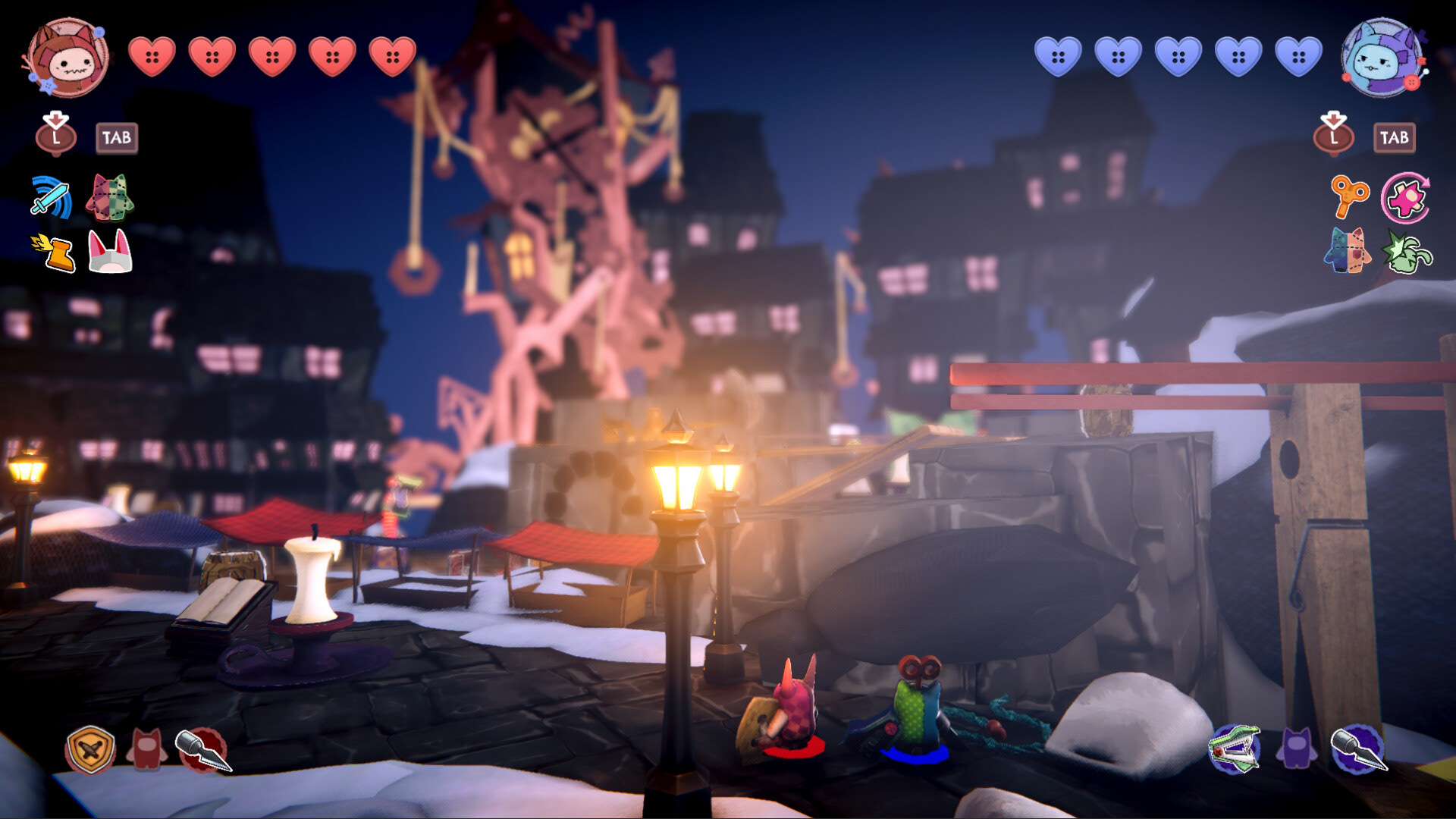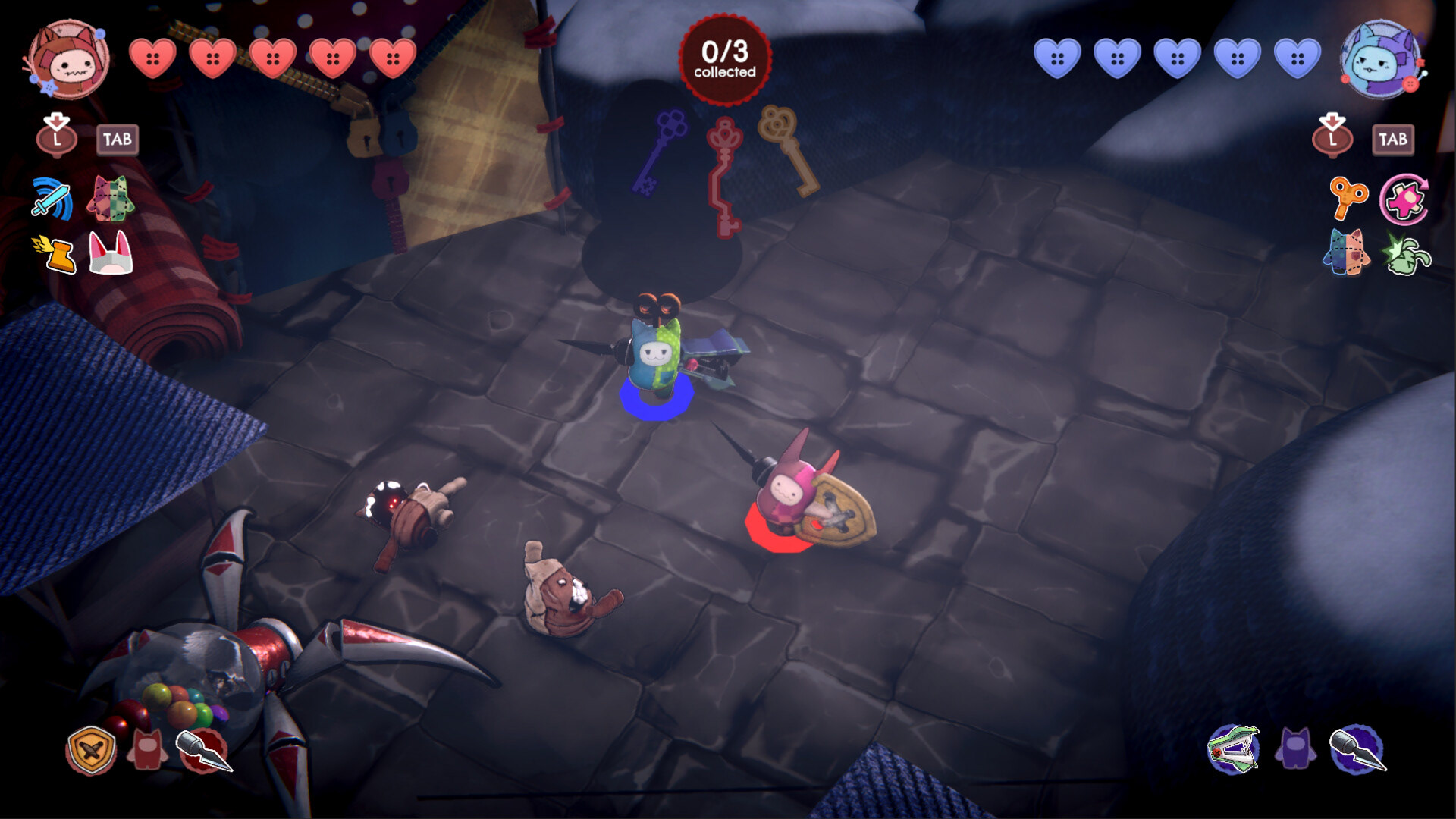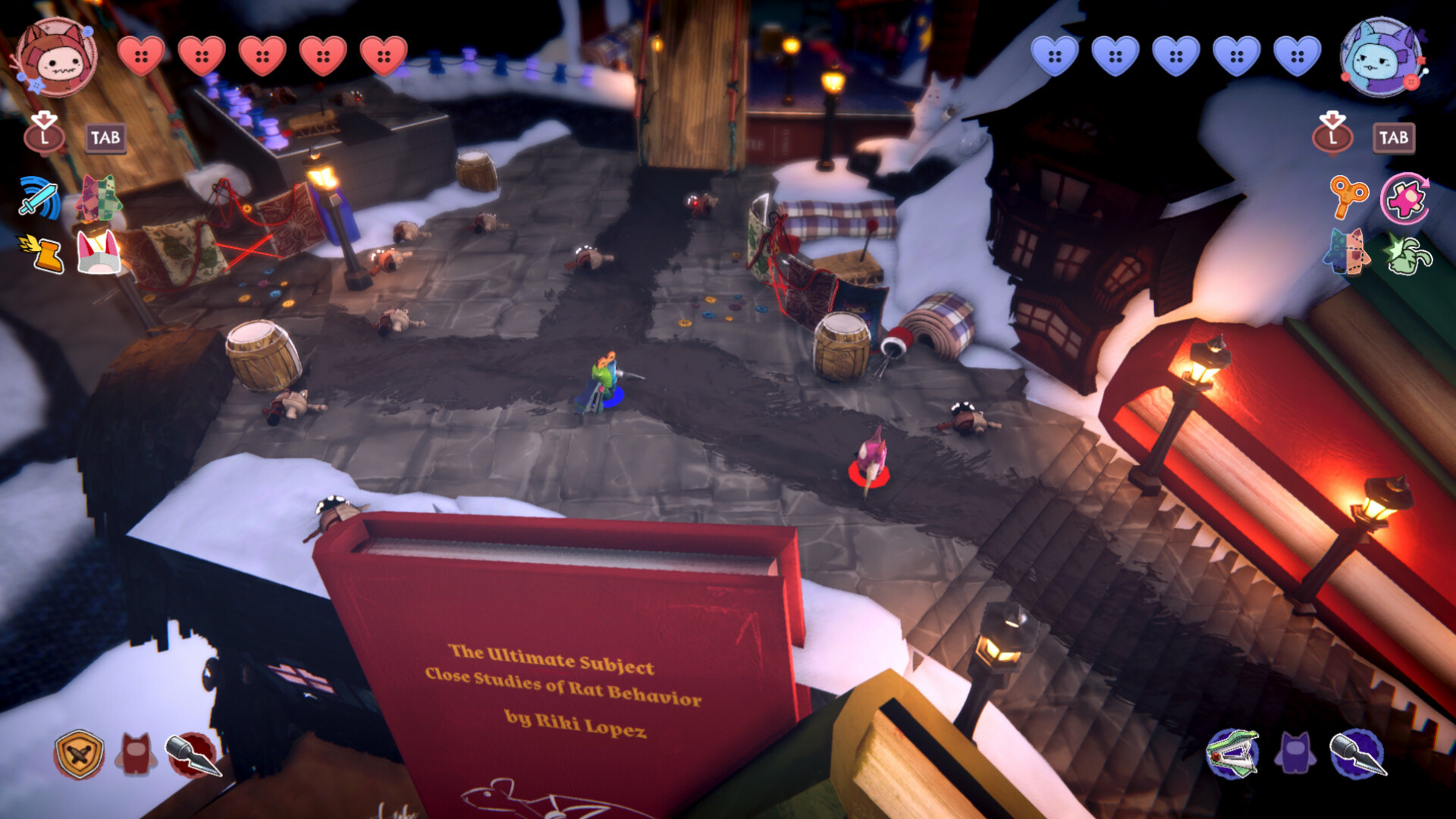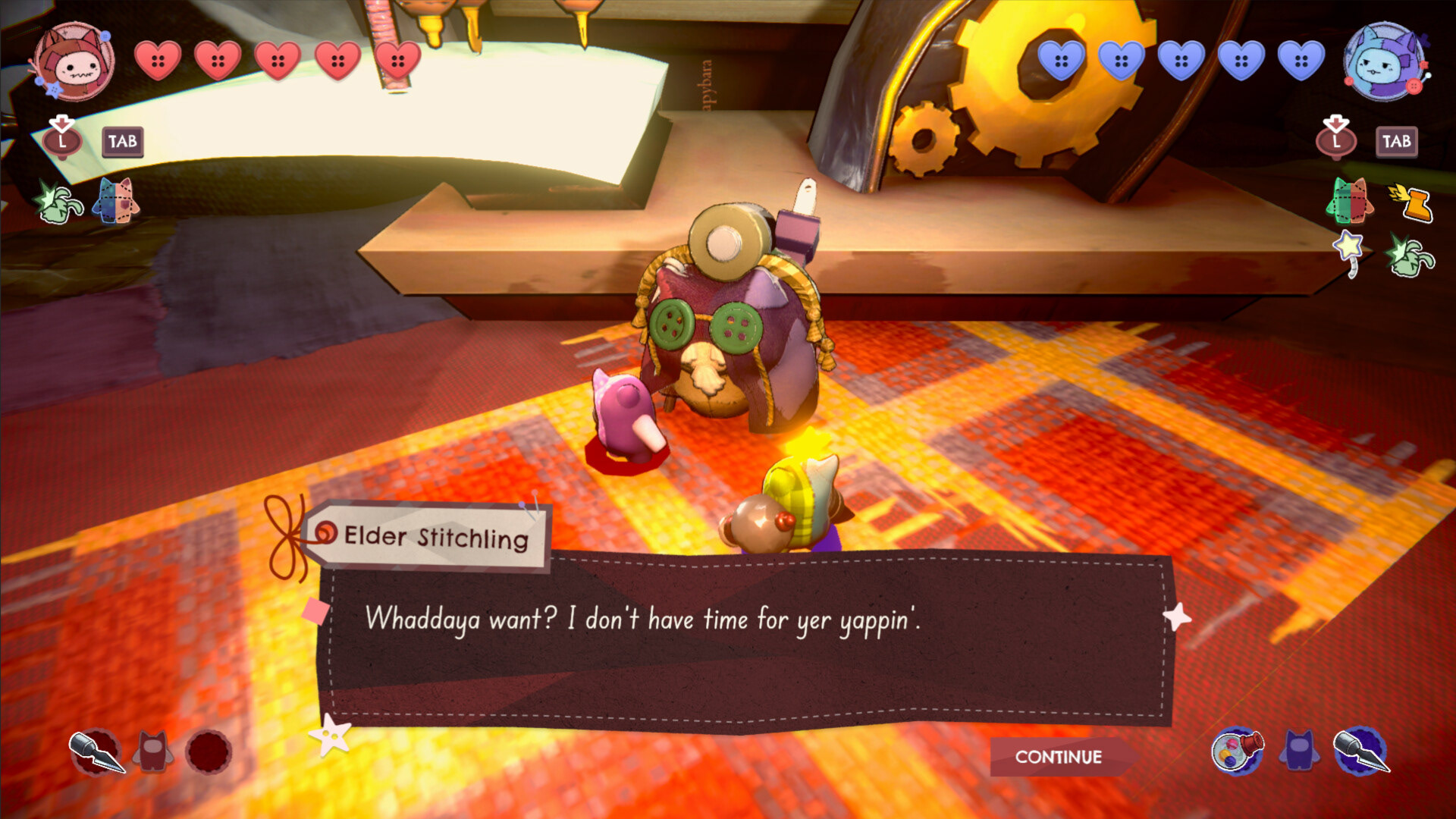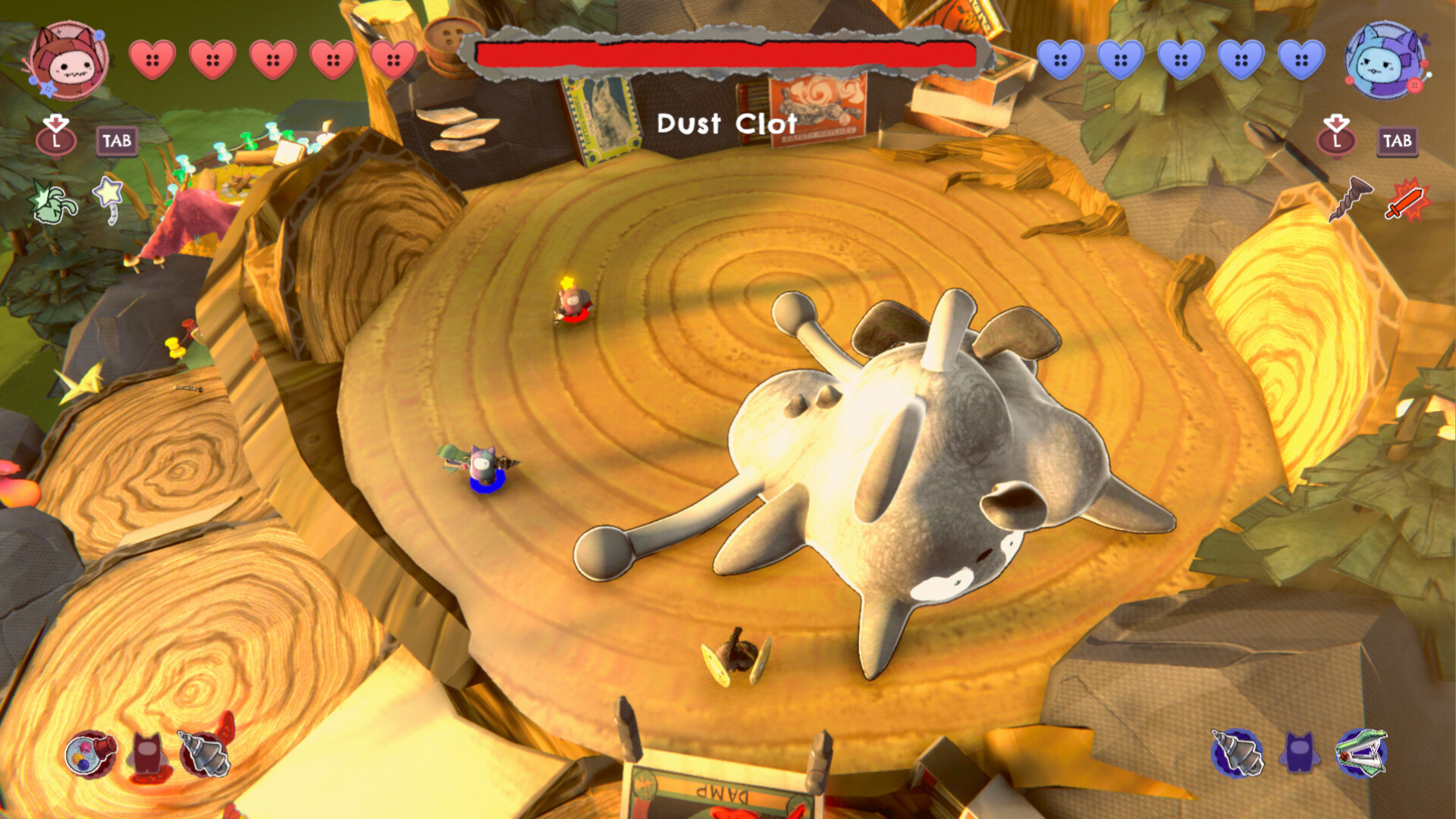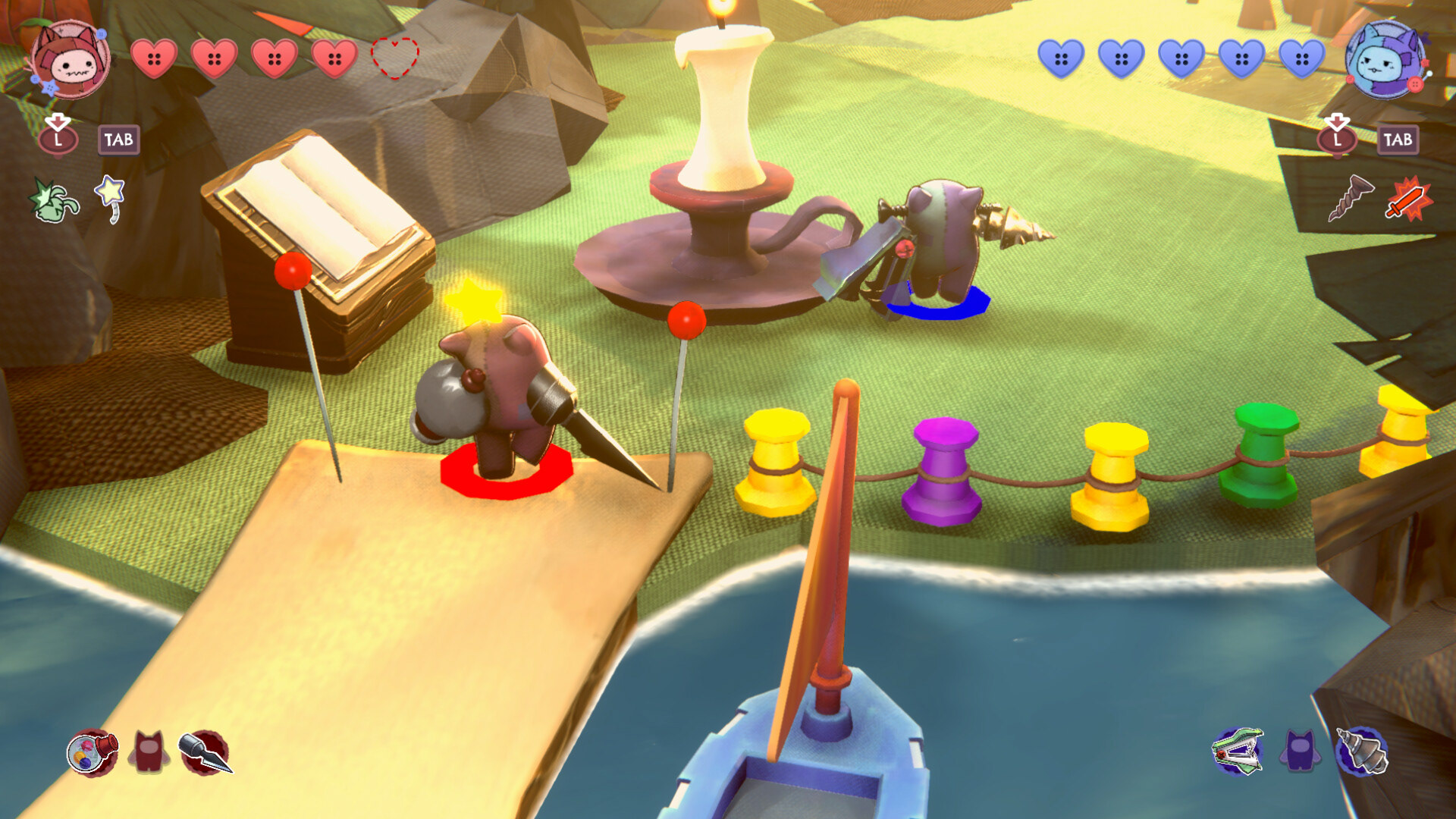
Stitchlings is a co-op hack and slash game made in Unity as a part of USC's Advanced Games Project program over the course of about a year.
ABOUT:
Stitchlings is a designed for couch co-op action game where the monsters you defeat become parts to stitch onto your character, allowing for player expression in both combat and aesthetics.
Grab a friend and embark on a grand adventure to rekindle a fading world where all you have is each other.
MY ROLE:
My role on the project was Level Designer.
That means I:
- Held ownership over the design of the two levels in the game (blockout, enemy placement, encounter gating) from first iteration to final polish
- Worked across disciplines to resolve dozens of collision and progression breaking bugs to make the experience as smooth as possible
- Participated in countless meetings to discuss the game's overall design vision, contributing ideas and creating design documentation for enemies, weapons, and areas
Workflow Breakdown:
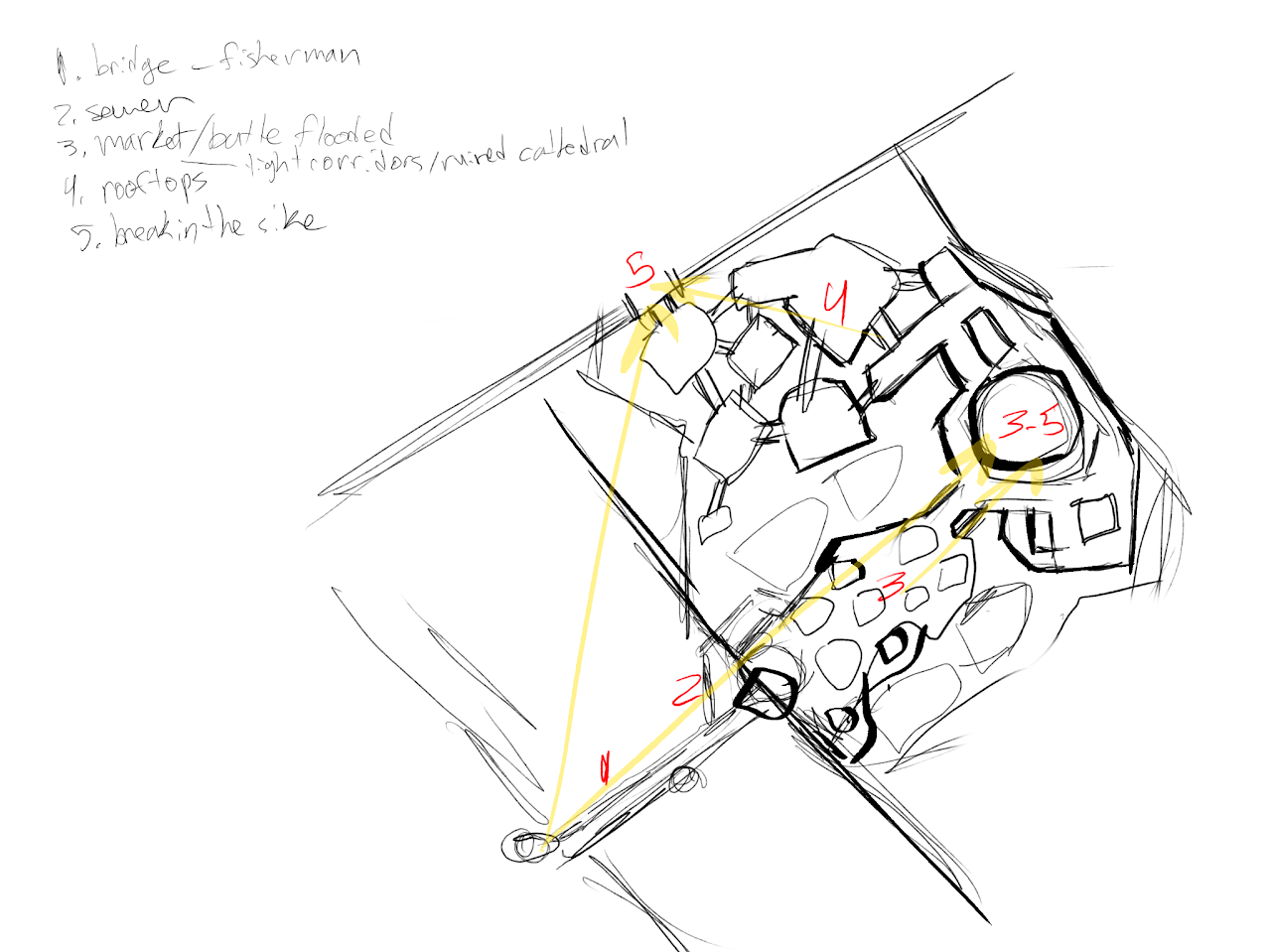
SKETCHING AND IDEATING:
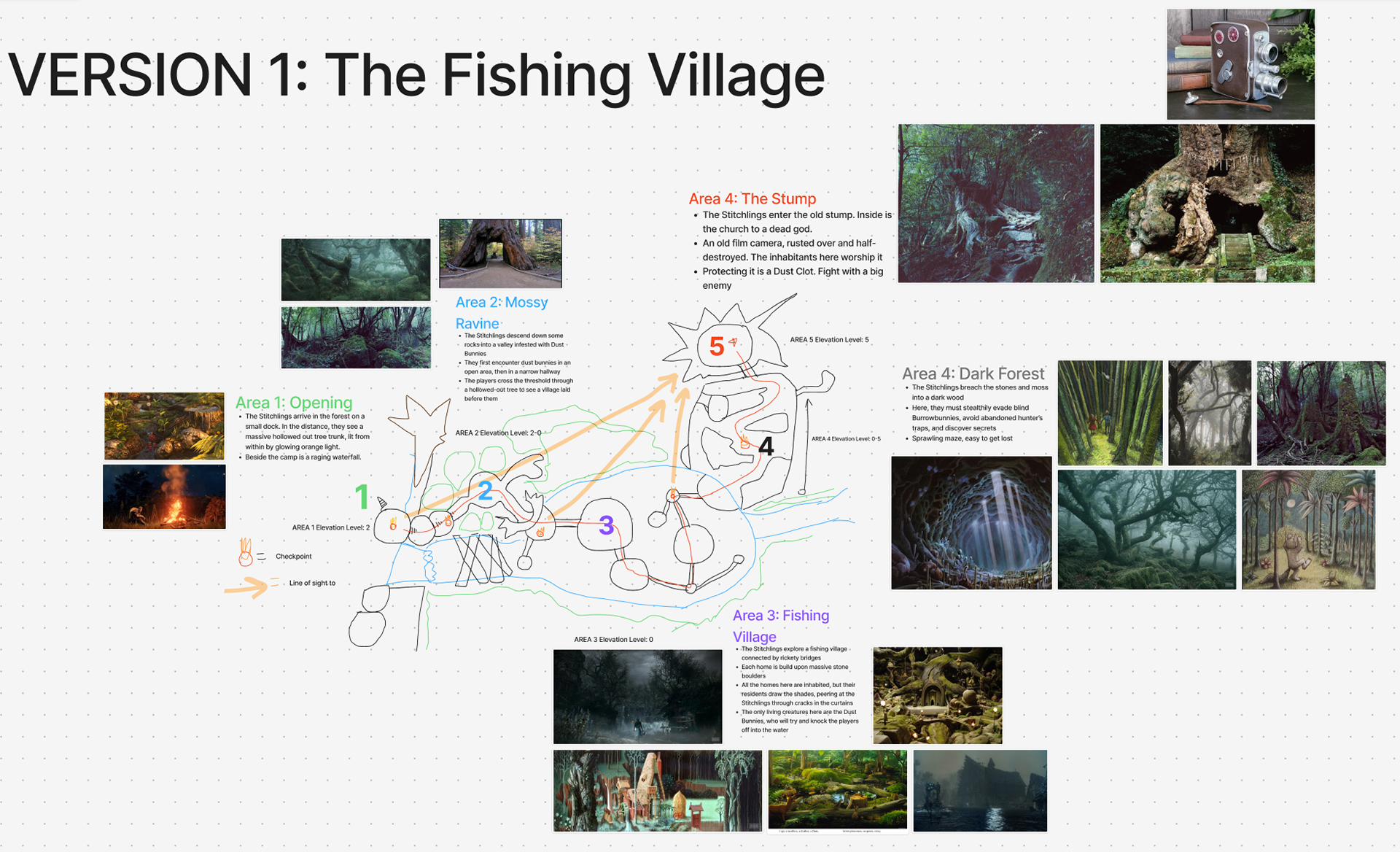
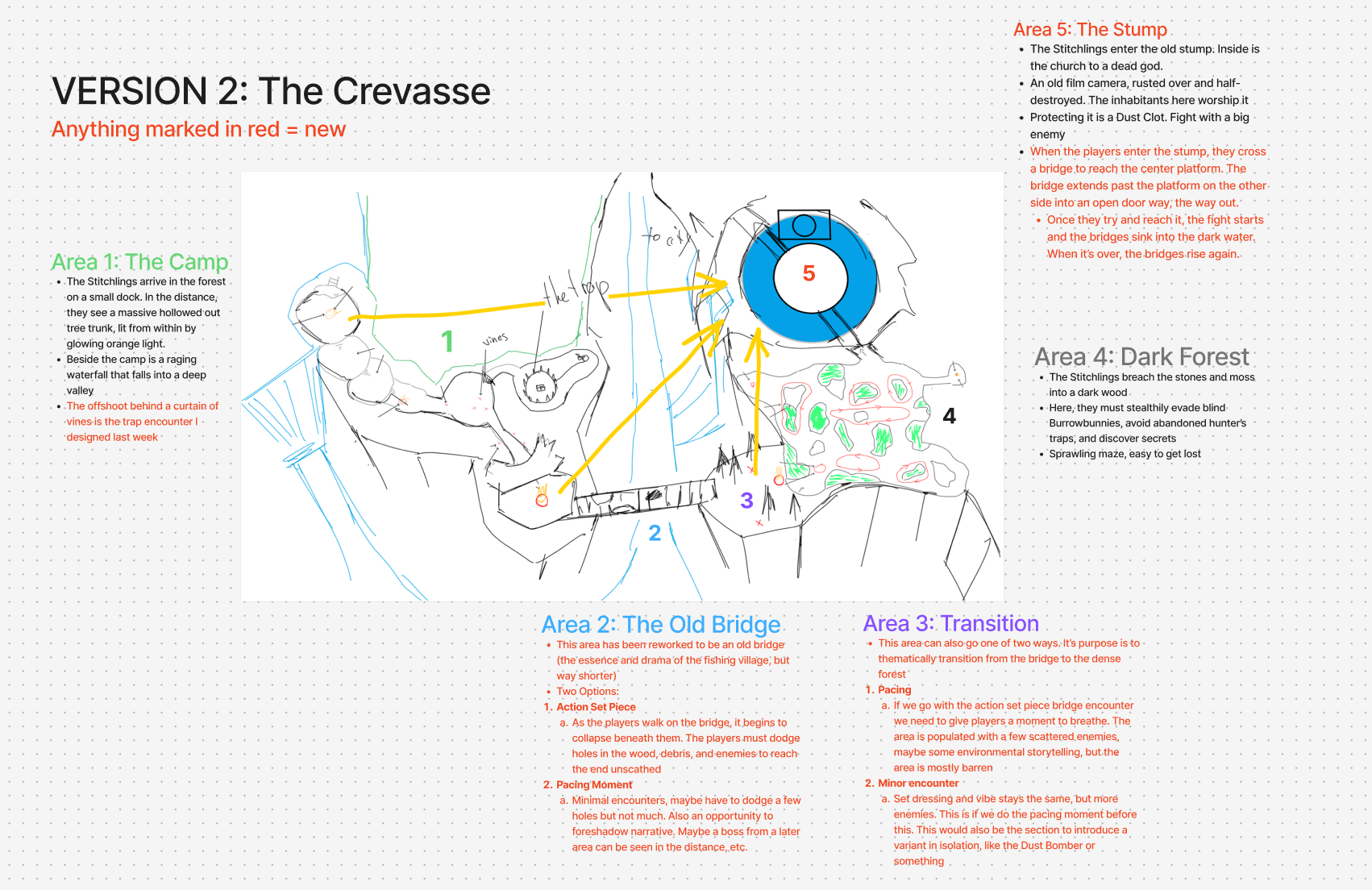
- During preproduction, I gathered reference and iterated a lot on paper
- This being a blue sky phase, most of the ideas were cut for scope and the layouts changed dramatically
- Some of the POI's, encounters, and weenies remained in the final game
- Helped establish a direction moving forward towards a first iteration
FIRST PASS BLOCKOUT:
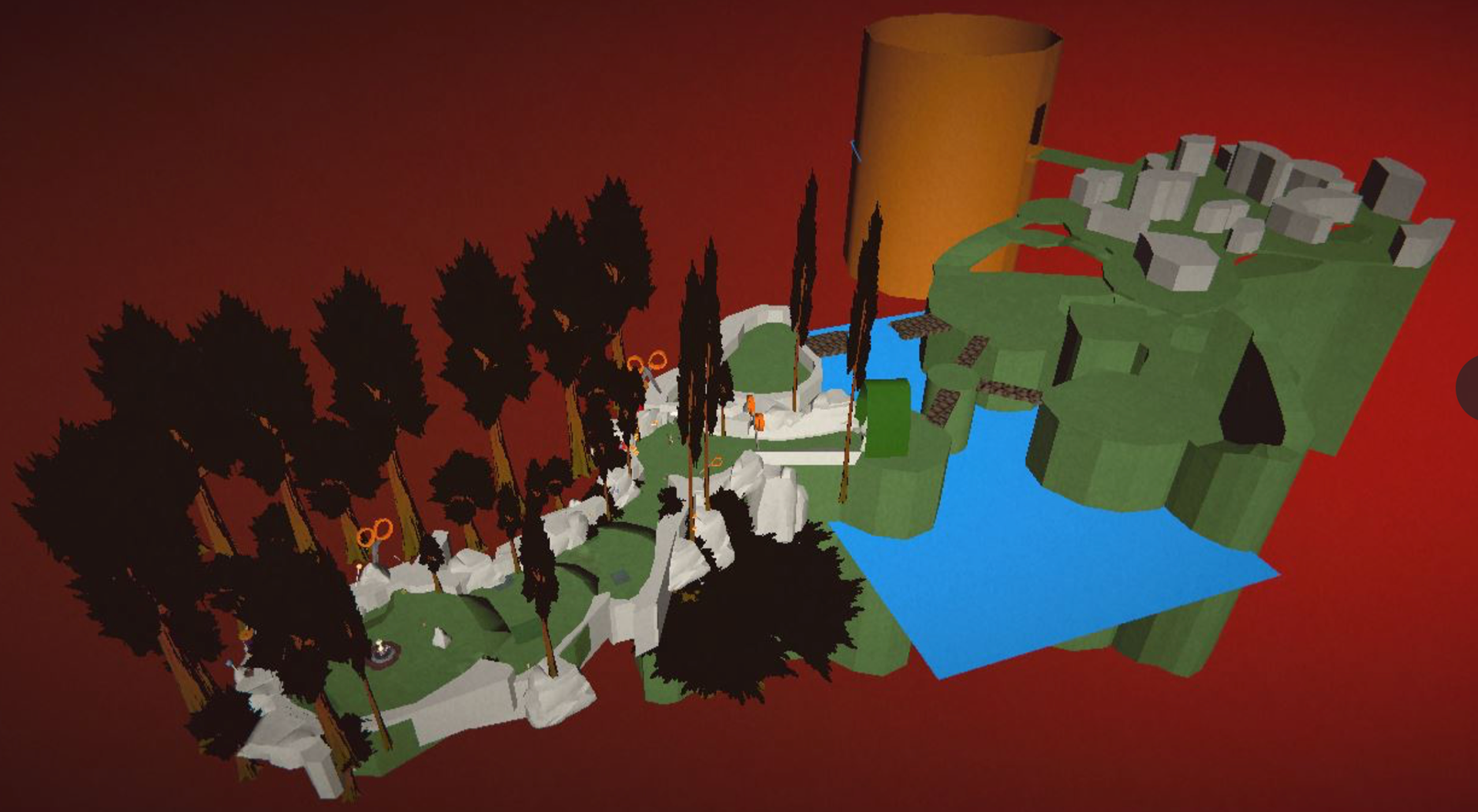
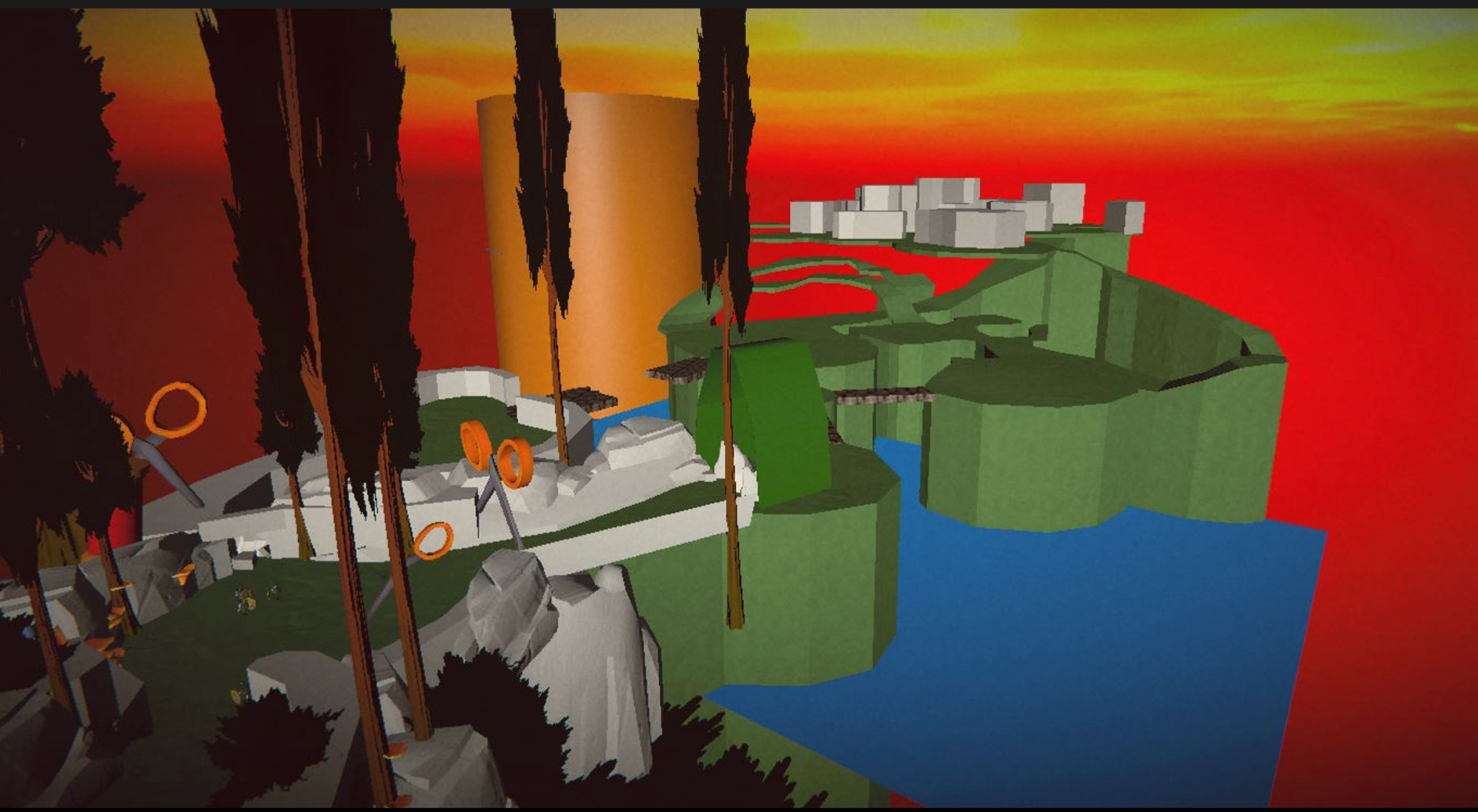
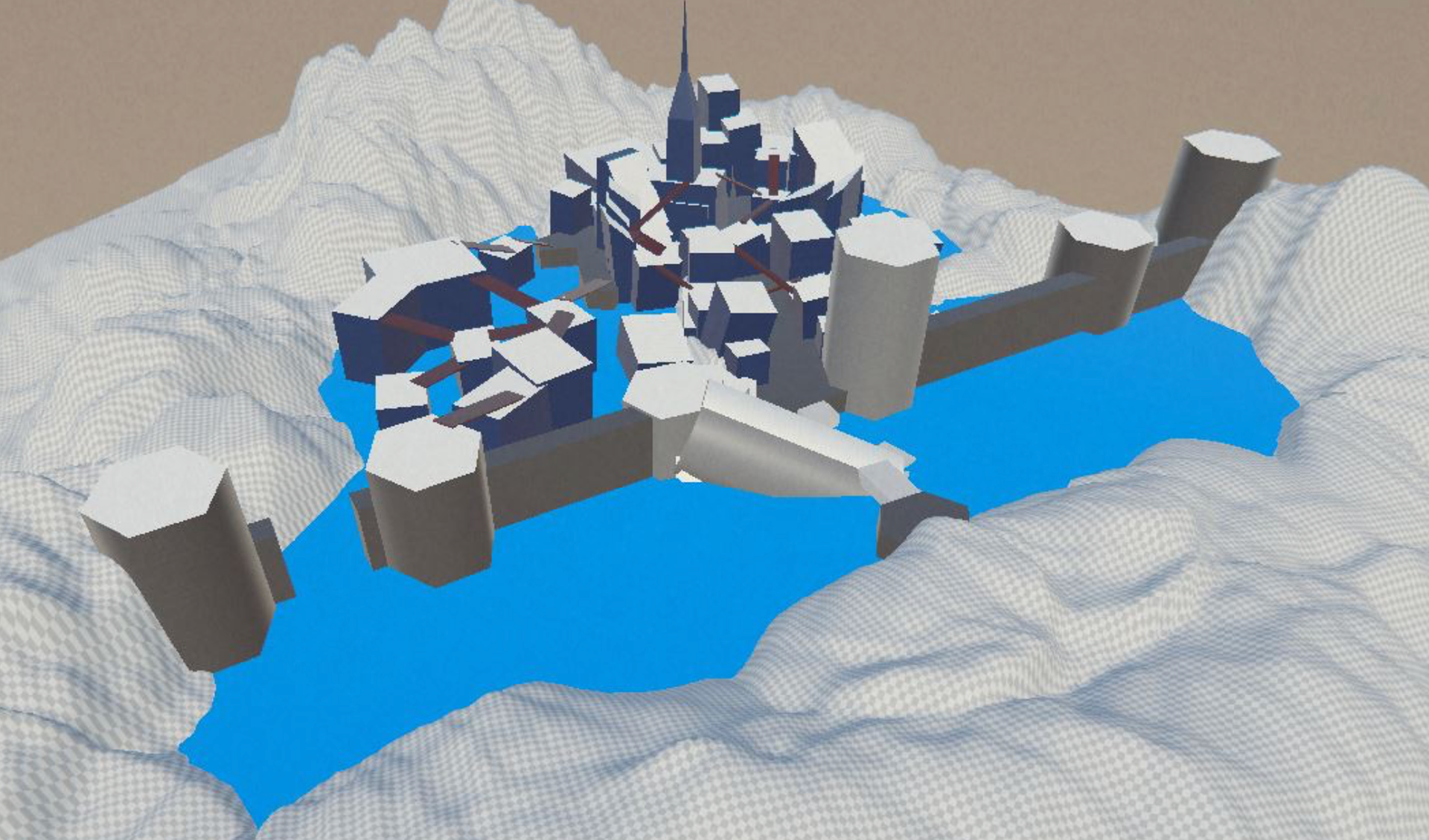
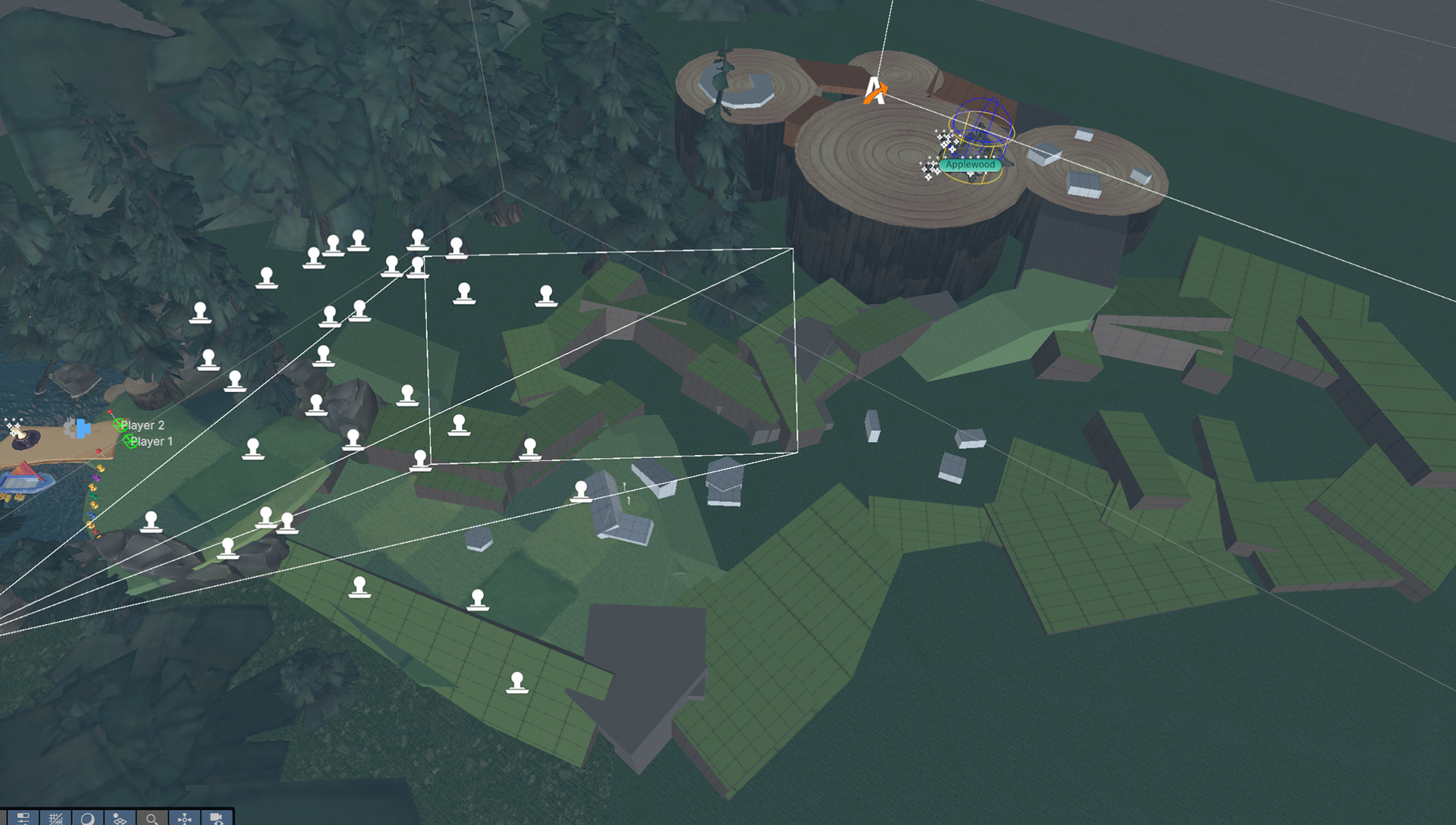
- Moving from paper to primitives in engine was a challenge and the first iteration for both levels was rough
- The top down camera view of the game meant that stacking spaces on top of each other was impossible
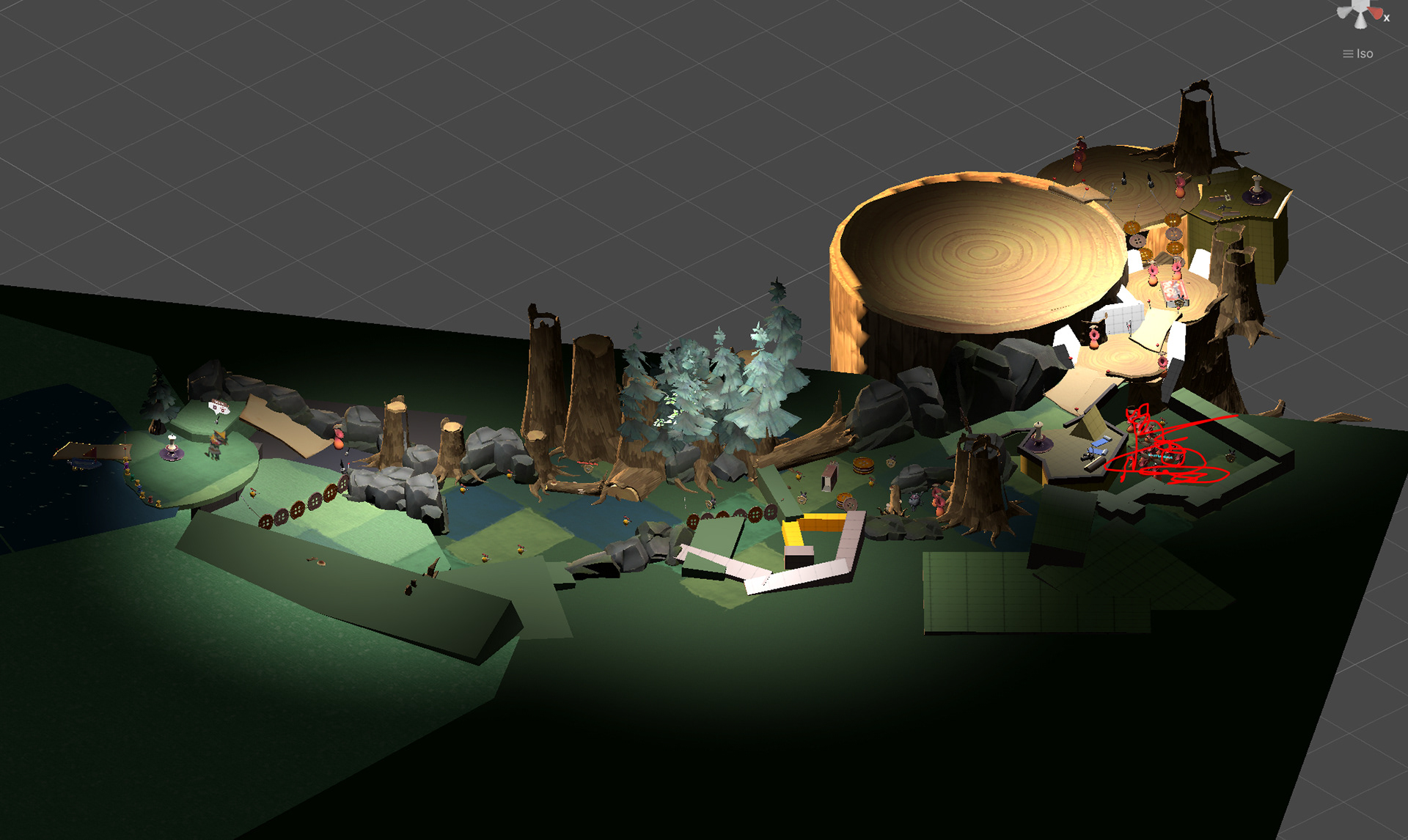
- This meant that to compensate, levels became sprawling
- The challenge then became reintroducing verticality and changes in elevation without sacrificing the camera
PLAYTEST, ITERATE:
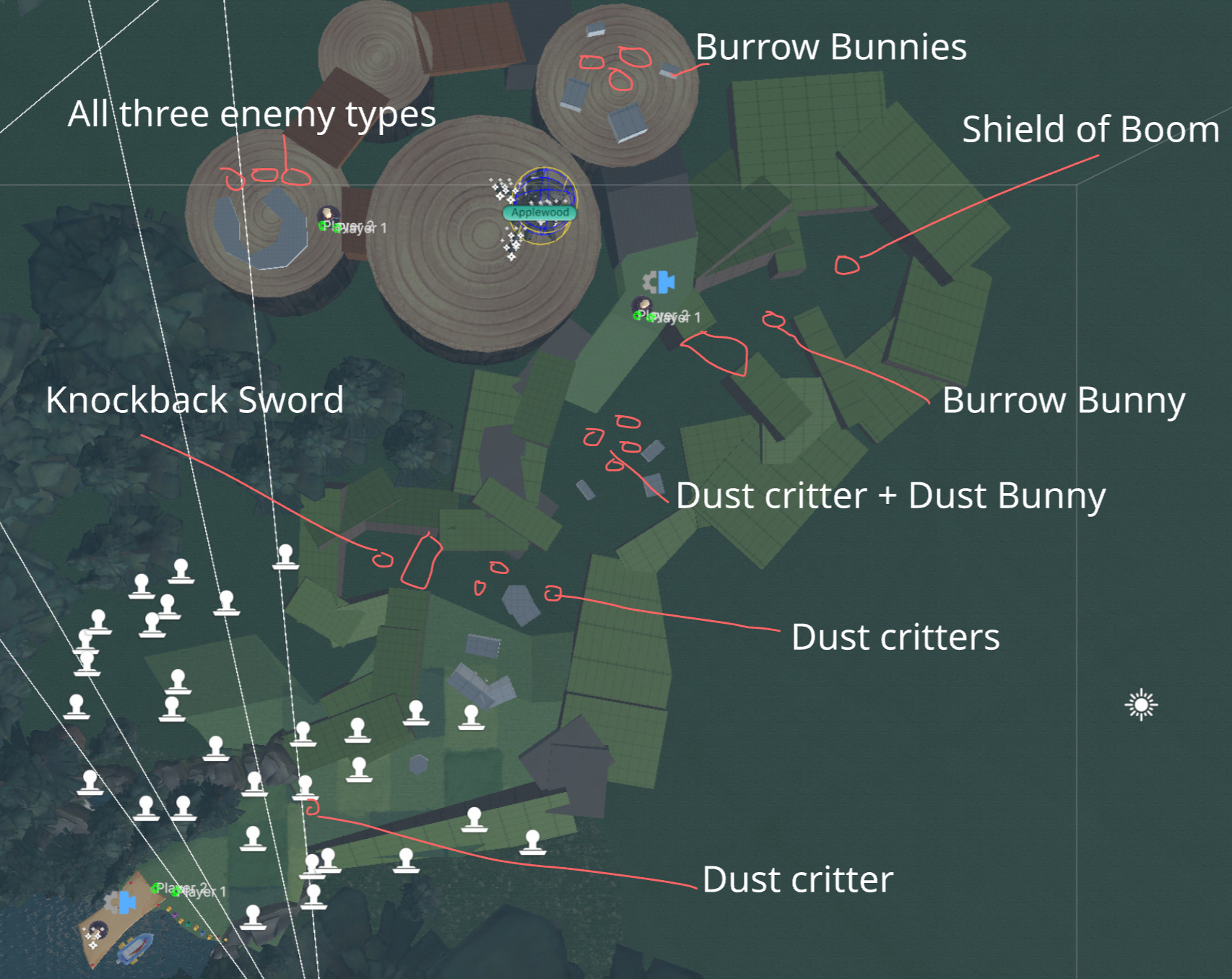
- Thanks to our weekly playtests, we were able to identify what players were responding to and lean in
- I balanced enemy encounters, refined weapon placement, and incorporated encounter gating and keys and doors
- I varied the width and breadth of paths and areas to make the linear structure of the game feel more dynamic
- I used ramps, stairways, and one way valves to inject verticality into combat and exploration
Combat Encounter: The Market
My favorite encounter I designed in the game was in the second level, the City.
My goals for this encounter were:
- Challenge the player to explore and fight enemies at the same time (something they haven't yet done)
- Break up the game's structure of linearity by creating a tense, non-linear arena
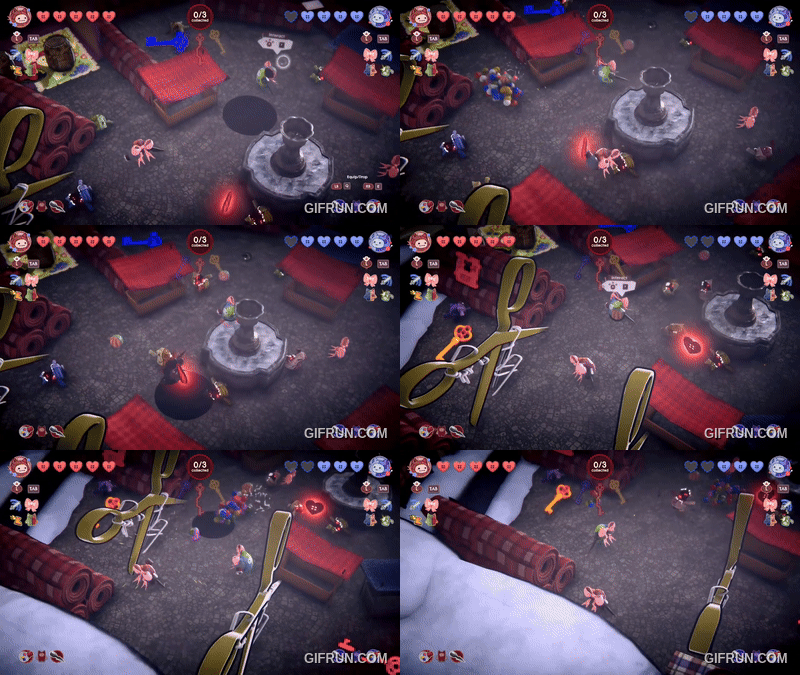
Encounter Setup:
When the player enters the market, they're shown 2 things:
1. A locked door they can't open, coupled with a UI popup signaling they need to collect three keys
2. A functional boundary that can't be passed until the player baits the enemy hurling boulders at them to hit it
These two design choices give the player an immediate goal (collect three keys) by presenting the problem before the solution and tutorialize the concept of breakable gates (which are required to complete the section)
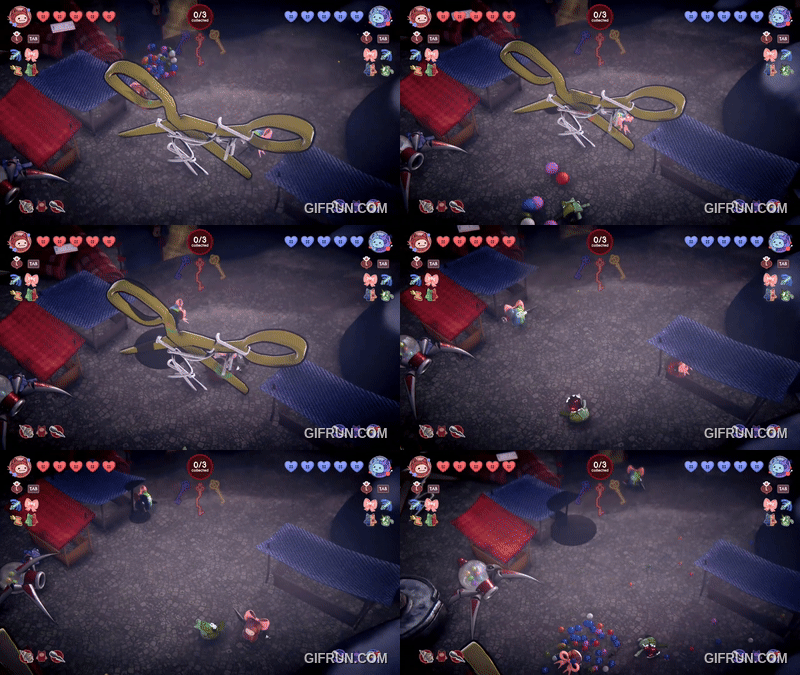
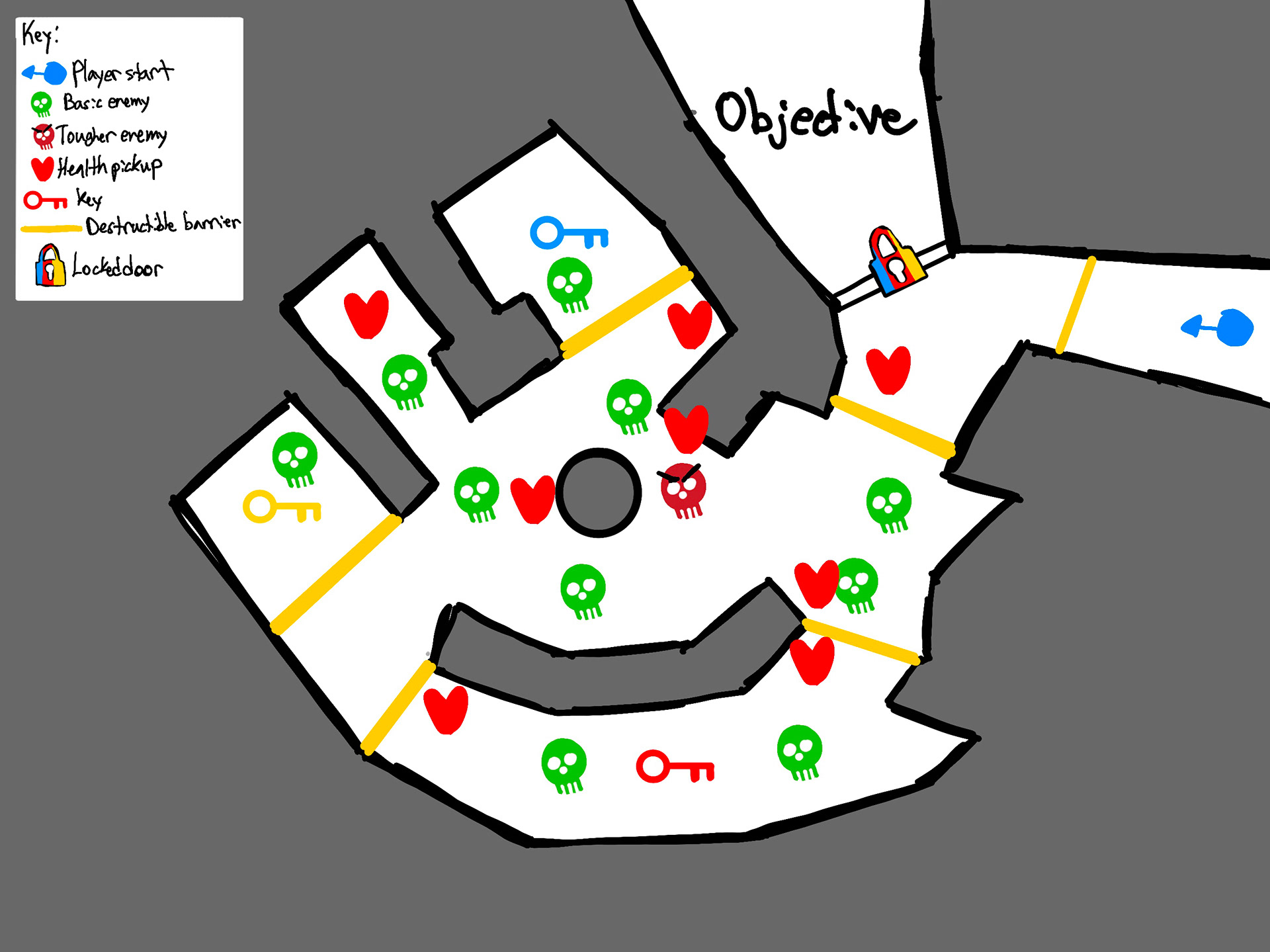
Layout:
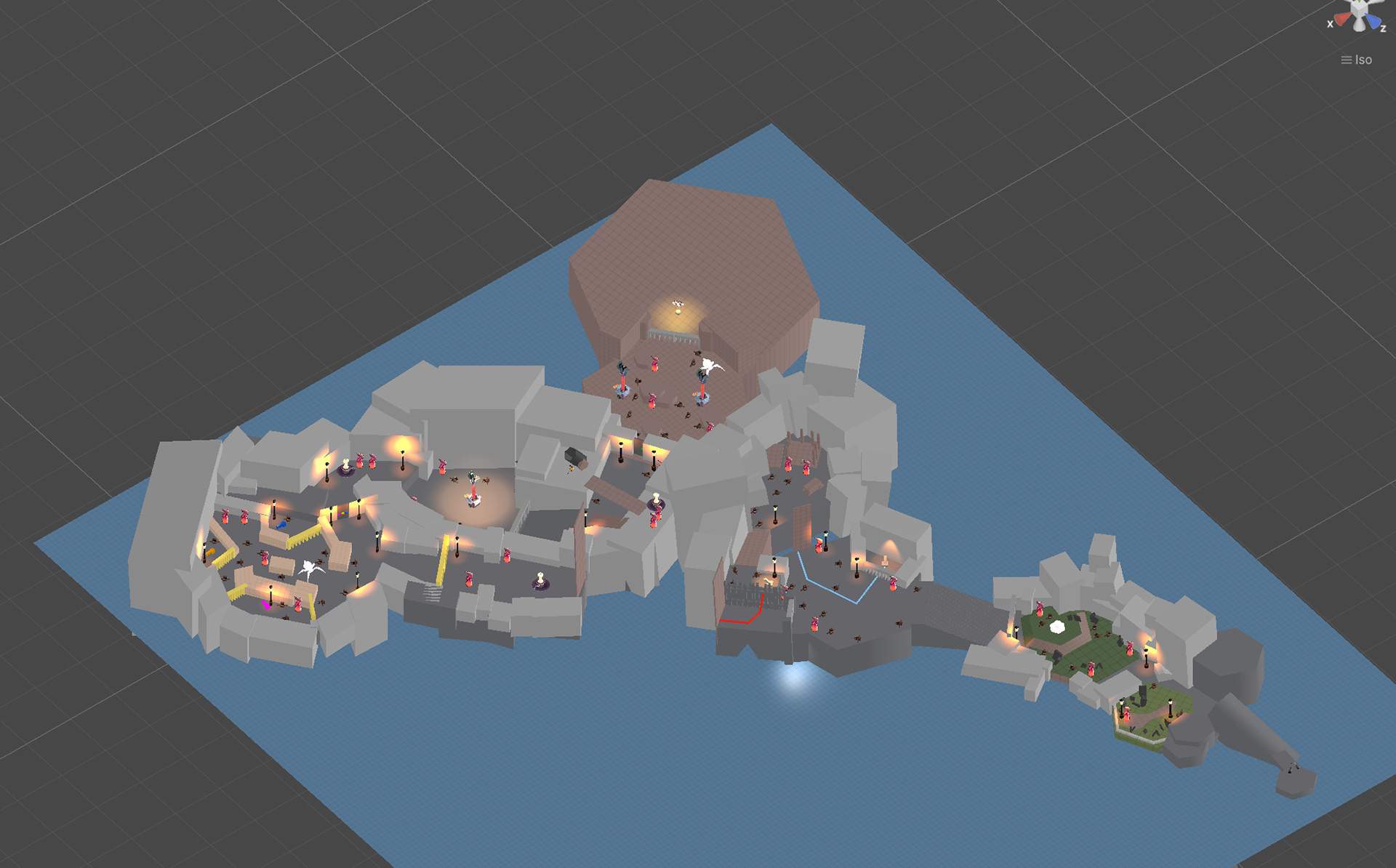
- I designed the encounter so that keys required for progression are scattered around the perimeter of the map
- Once the enemies in the center are defeated, the player can return to the middle lane for a brief reprieve before deciding where to go next
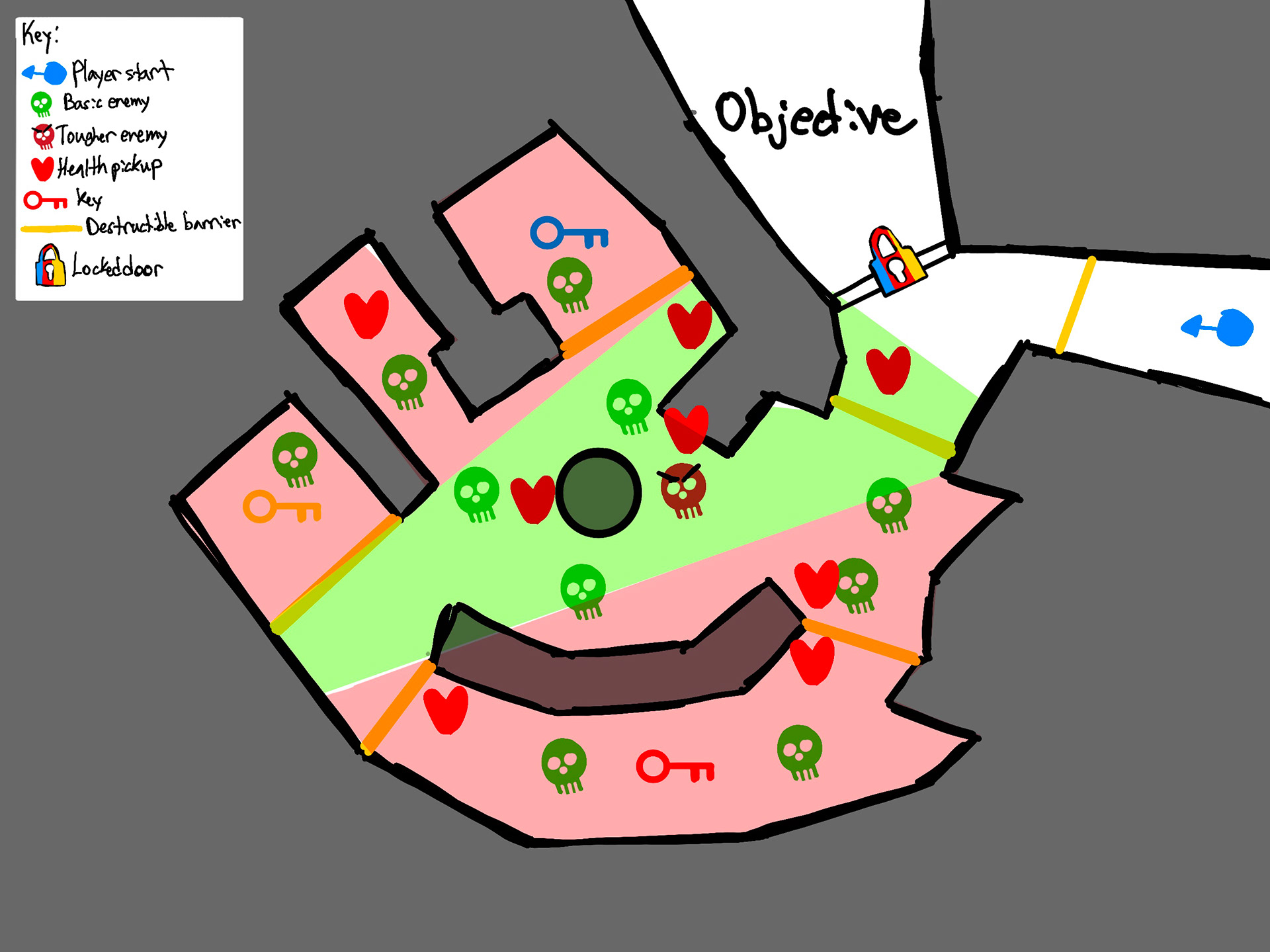
- This symmetrical layout with key objectives placed on either half of the area creates pacing
- Red areas are riskier and contain key objectives, while the green middle lane is comparatively lower risk once the enemies have been defeated
- Framework inspired by Aubrey Serr's GDC talk
RECEPTION:
150,000+ Steam Adds
40,000+ Unique Users
300+ Reviews (90% Positive)
Final Screenshots: